Case Study 03
Elder by Hivemind Production & Tech
Turning a facilitator-led cultural learning workshop into a research-led, AI-guided product concept for workplace teams.
Role
End-to-End Product Designer
UX Research, Product Strategy, UX Design and UX Writing
Status
Investor-ready product concept
Overview
Elder was conceived as a digital learning platform for workplace teams, based on workshops focused on Aboriginal perspectives, cultural understanding, empathy, and better collaboration across different backgrounds.
The existing experience lived mainly in facilitated workshops, long-form learning material, reflection questions, and follow-up activities. The goal was not simply to put that material online. We needed to understand what the digital product should actually be, how people would move through it, and what would make them willing to participate.
I joined at the concept stage, when the team needed enough product definition and prototype fidelity to communicate the idea clearly and support a funding pitch for full development.
This was primarily a research and product-definition problem before it became an interface problem.
Context
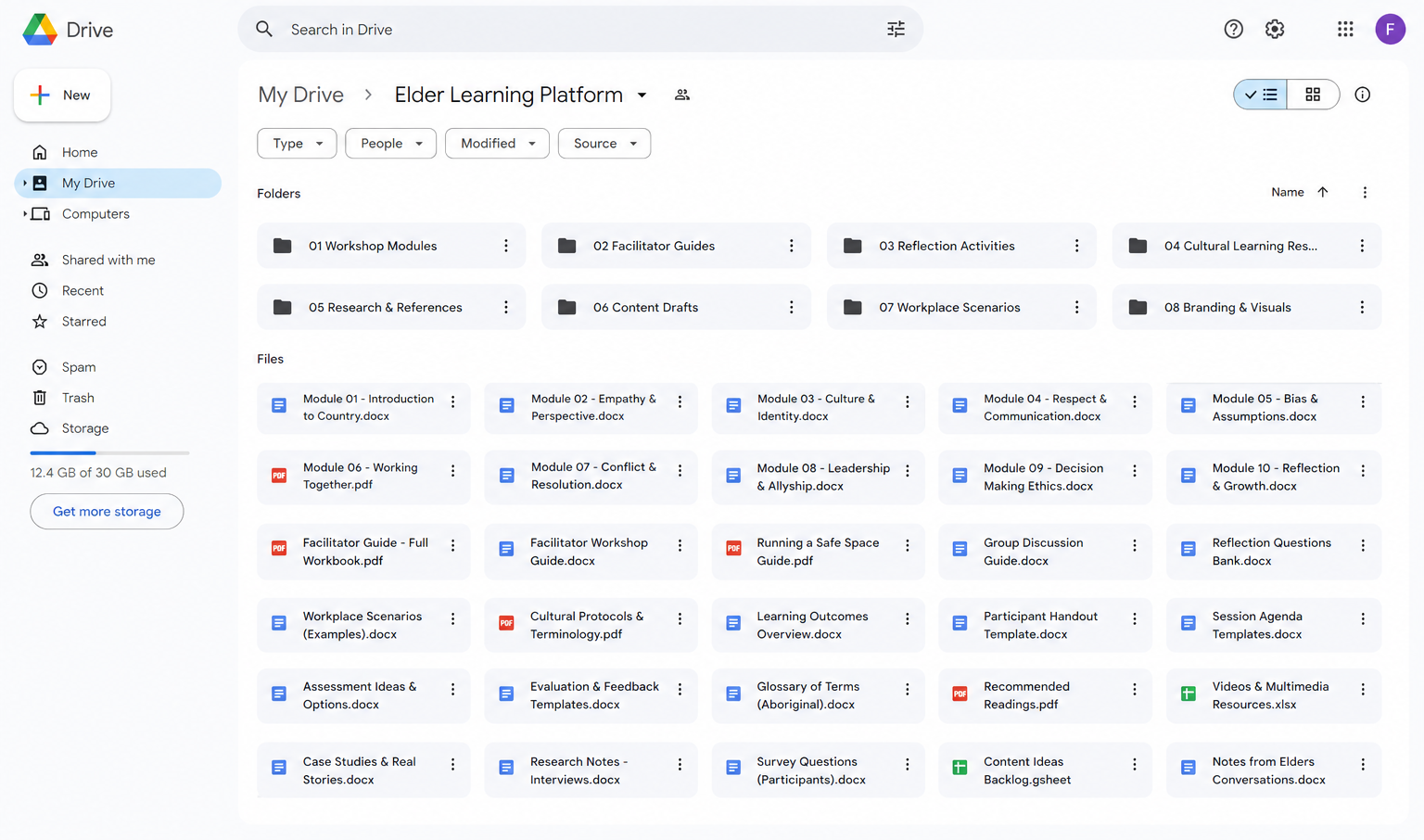
The starting point was a large amount of workshop content rather than a defined software experience. The material included learning modules, facilitator-led discussions, reflection prompts, written exercises, and longer explanations around culture, ethics, empathy, and workplace behavior.
That format made sense when a facilitator was present. In software, the same material risked becoming a long sequence of text and questions with no human guide to provide context, answer questions, or keep people engaged.
The team also needed to show potential funders something concrete without pretending that every product decision had already been solved. That meant creating enough structure to make the idea understandable while keeping the concept flexible enough to change as we learned.
The Problem
- Dense workshop material did not translate naturally into a self-guided digital experience
- People needed room to ask questions, not only consume predefined lessons
- Sensitive cultural topics needed to feel thoughtful and human rather than like mandatory compliance training
- The learning structure had to work for people from different professional and cultural backgrounds
- The concept needed to be engaging enough to communicate its value in a funding pitch
- The prototype needed enough fidelity to explain the product while remaining open to change
The question became: how might we turn a facilitated workshop into a self-guided experience without losing the conversation, curiosity, and human context that made the workshop valuable?
My Role
End-to-End Product Designer
I worked across discovery, research synthesis, product definition, information architecture, learning structure, UX writing, interaction design, prototyping, and the final investor-ready concept.
- Reviewed and broke down the existing workshop and learning material
- Facilitated brainstorming and product-definition discussions with the wider team
- Conducted and synthesized qualitative interviews and workshop observations
- Mapped user needs, questions, learning behaviors, and possible friction points
- Studied comparable learning products and engagement patterns
- Created personas and early learning journeys from research themes
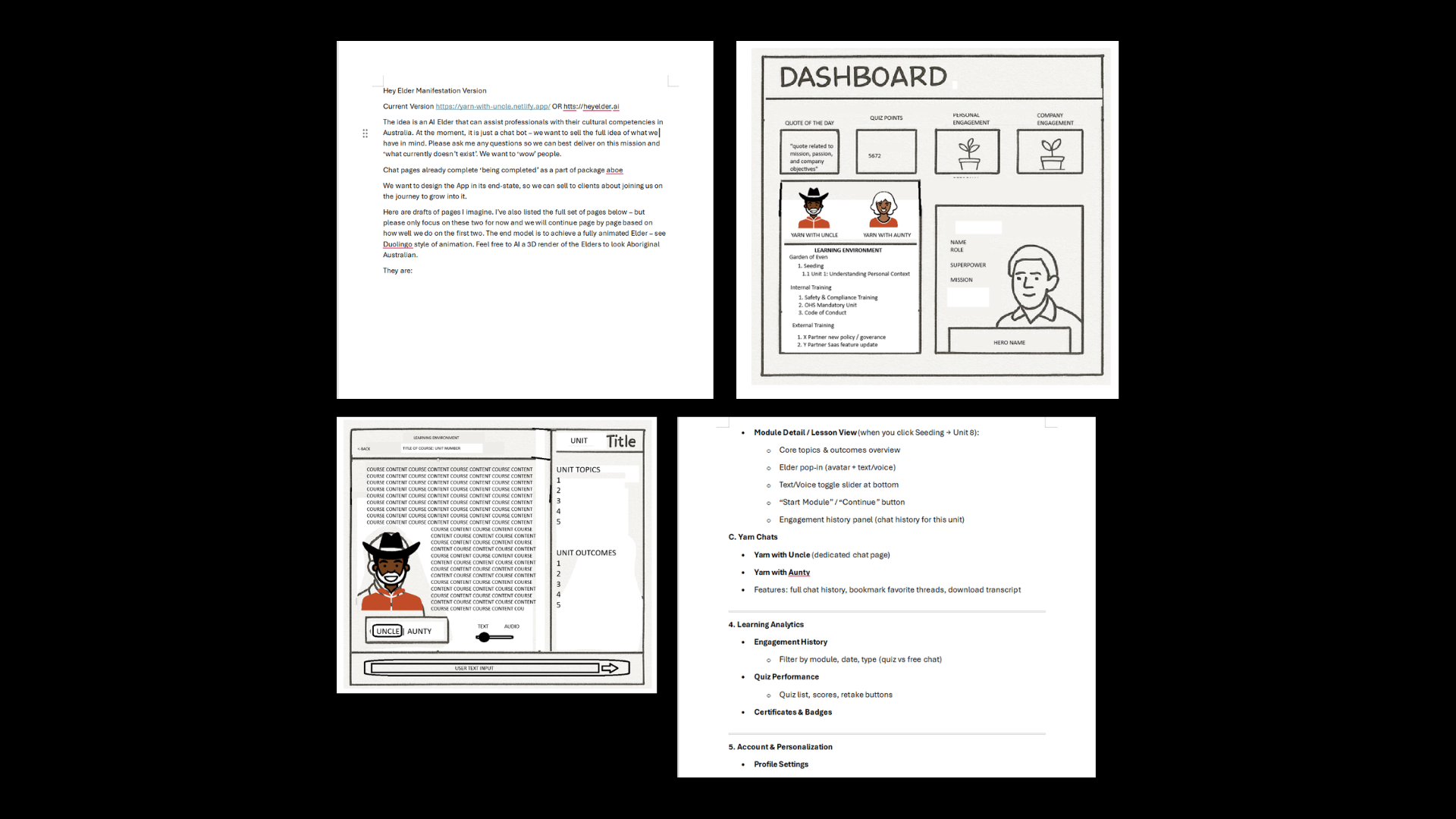
- Explored the Elder guide, AI conversation, module structure, progress, and gamification concepts
- Moved from paper sketches and rough flows into a medium-fidelity prototype for the funding pitch
Research & Product Discovery
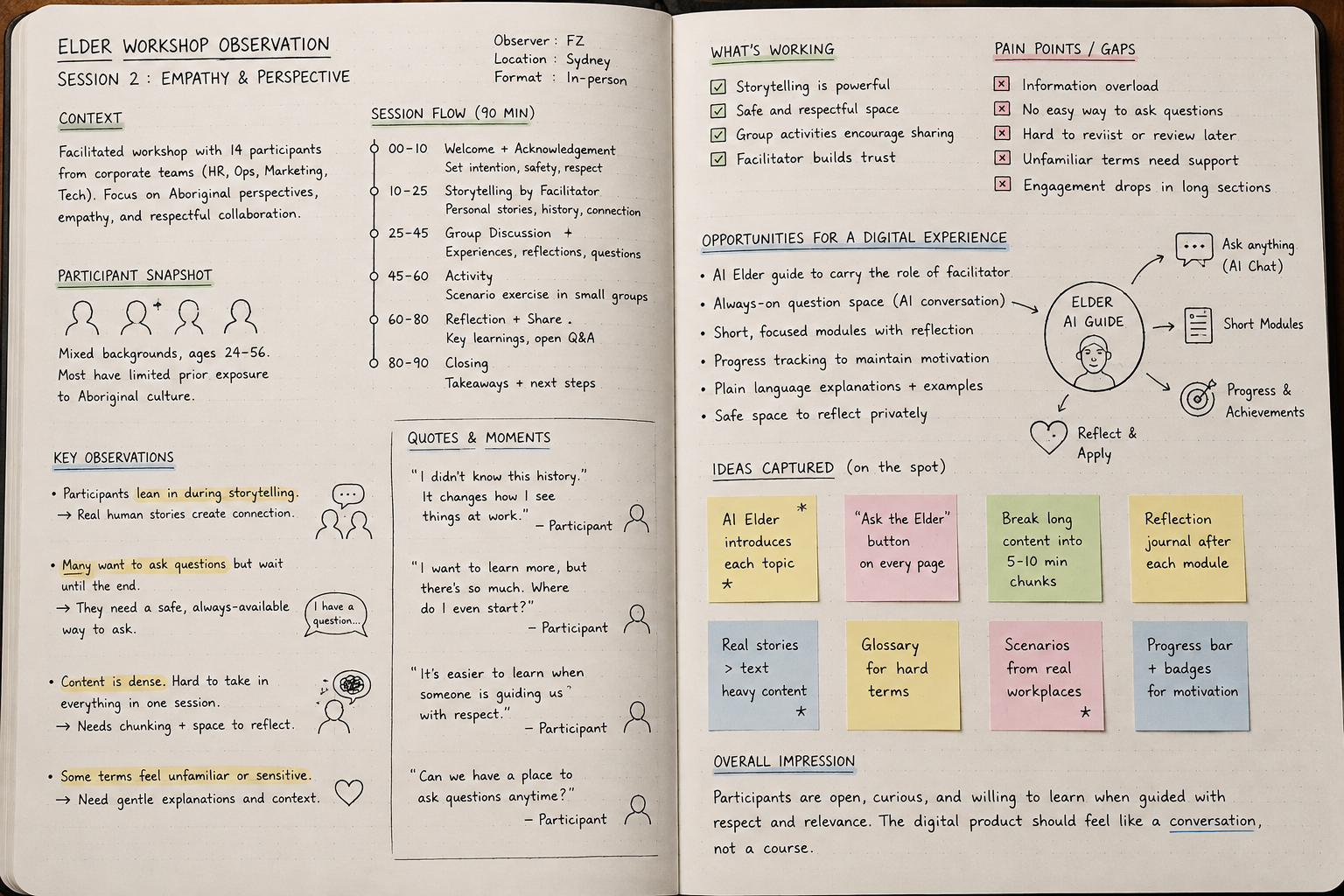
Because the product itself was still undefined, I did not begin by testing polished screens. The first research goal was to understand the existing workshop experience: what people valued, where attention dropped, what required explanation, what questions appeared naturally, and what would be lost if the facilitator disappeared.
I combined several qualitative methods. I joined and observed workshop activity, held short remote interviews with people involved in or exposed to the learning experience, spoke with facilitators and project stakeholders, and used group discussions and brainstorming sessions to compare different interpretations of the product.
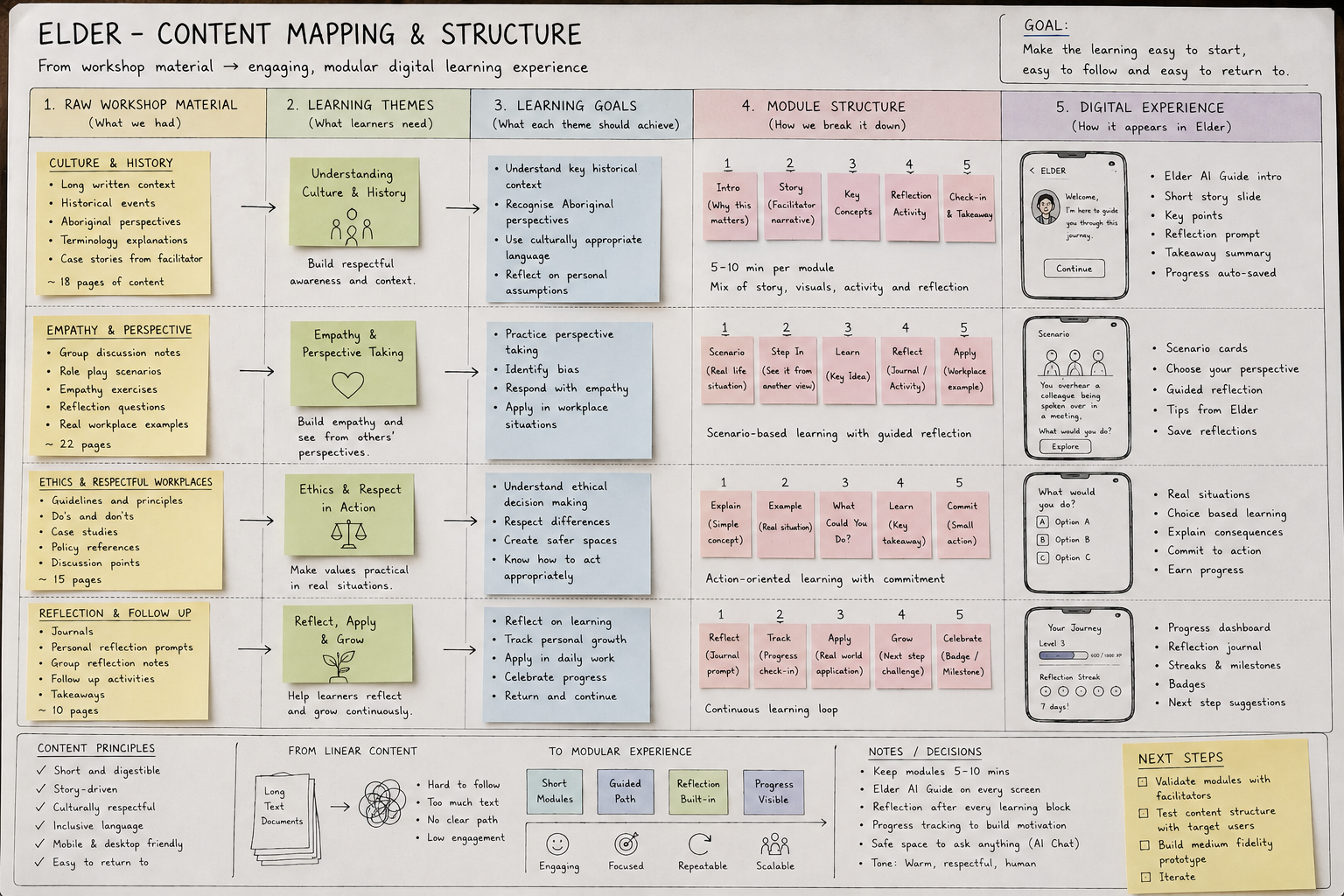
I also reviewed the existing learning content line by line and grouped it into themes, learning goals, questions, reflection moments, and possible interactions. This content audit helped separate what needed explanation from what could become a prompt, activity, checkpoint, or conversation.
Competitive research focused less on finding a direct competitor and more on understanding interaction patterns from digital learning products. I looked at how products such as Duolingo make progress visible, break learning into smaller sessions, create momentum, and give users a reason to return.
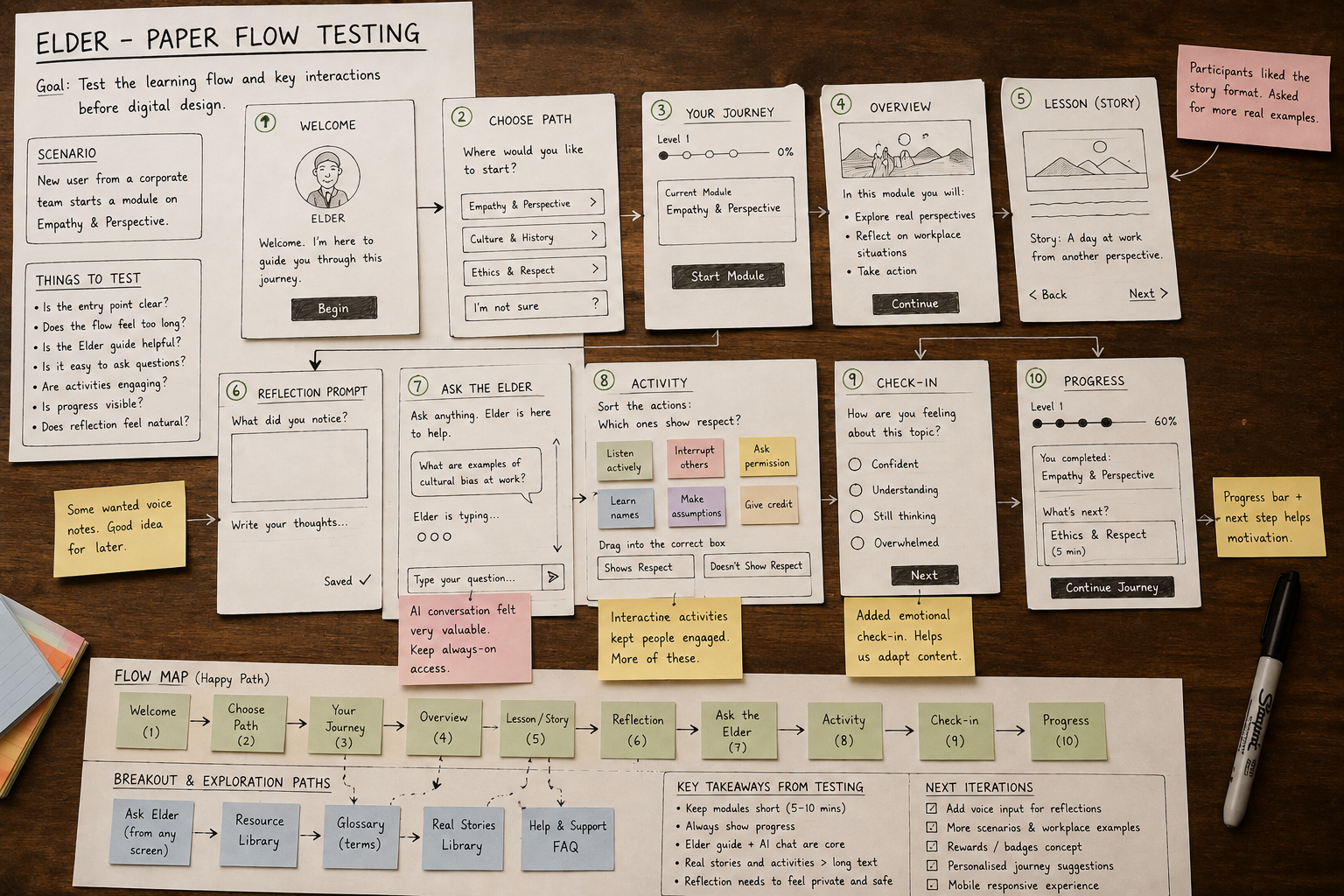
Early concepts stayed deliberately rough. Paper sketches, card-based flows, and medium-fidelity prototypes made it easier to move modules around, question the sequence, and discuss ideas without making the concept feel finished too early.
Research methods
- Stakeholder and facilitator interviews
- Workshop observation and contextual notes
- Short participant interviews and open-ended feedback
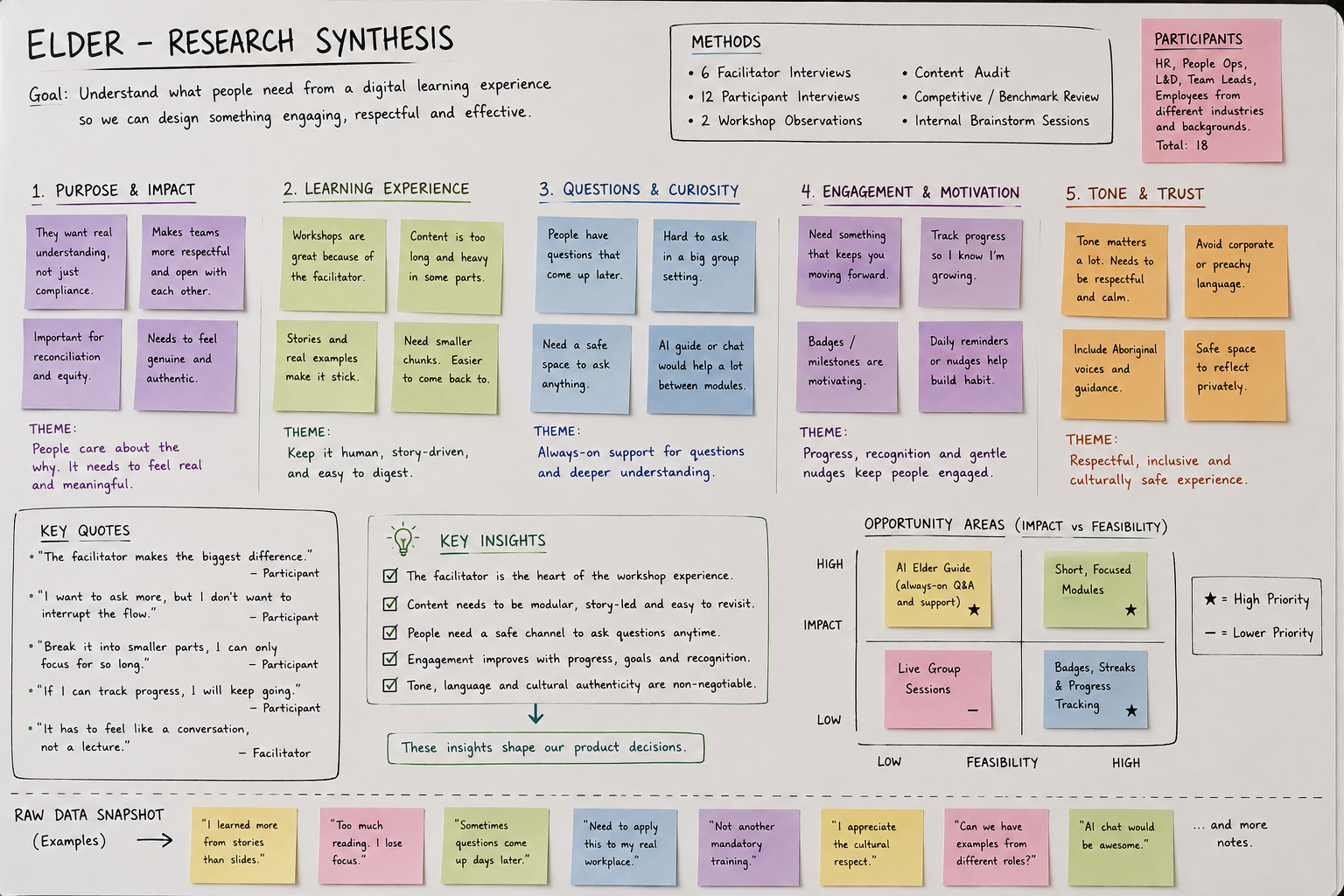
- Content audit and thematic synthesis
- Competitive and pattern research across learning products
- Personas and learning journey mapping
- Paper prototyping and card-based flow exploration
- Concept feedback using medium-fidelity prototypes
What Research Changed
The research changed the project from a digitized workshop into a product with its own interaction model.
- Long lessons became smaller learning moments. Content needed to feel achievable rather than like reading a handbook.
- The experience needed a guide. In workshops, people could rely on a facilitator. The digital product needed a consistent presence that could introduce ideas and create continuity.
- Questions could not be limited to a fixed lesson. People needed a way to explore questions that emerged while learning.
- Progress needed to be visible. A clear learning path, checkpoints, and lightweight rewards could make a large subject feel manageable.
- The tone mattered as much as the structure. The product needed to invite curiosity and reflection rather than make people feel tested or judged.
The Approach
A guided conversation, not a digital textbook.
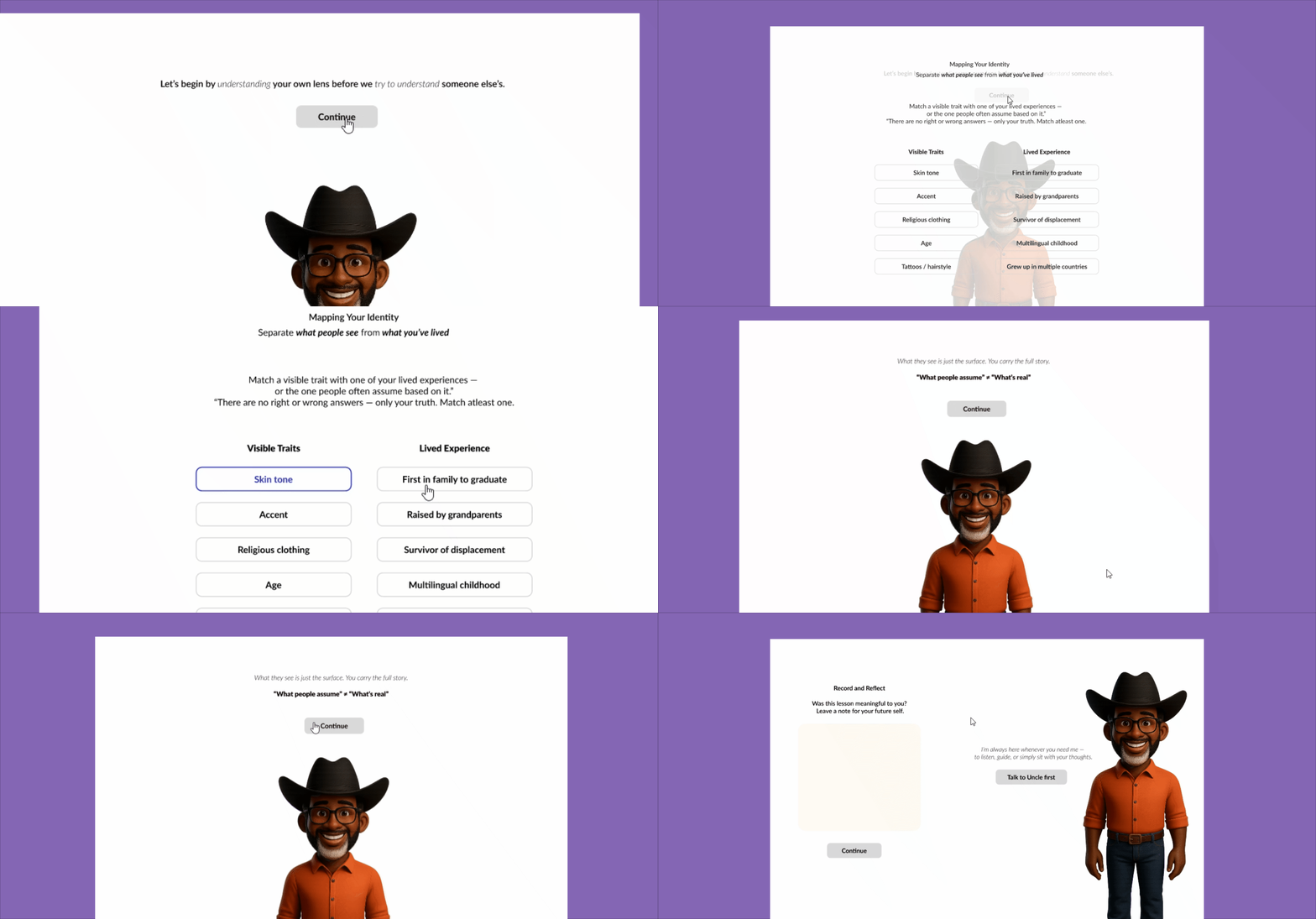
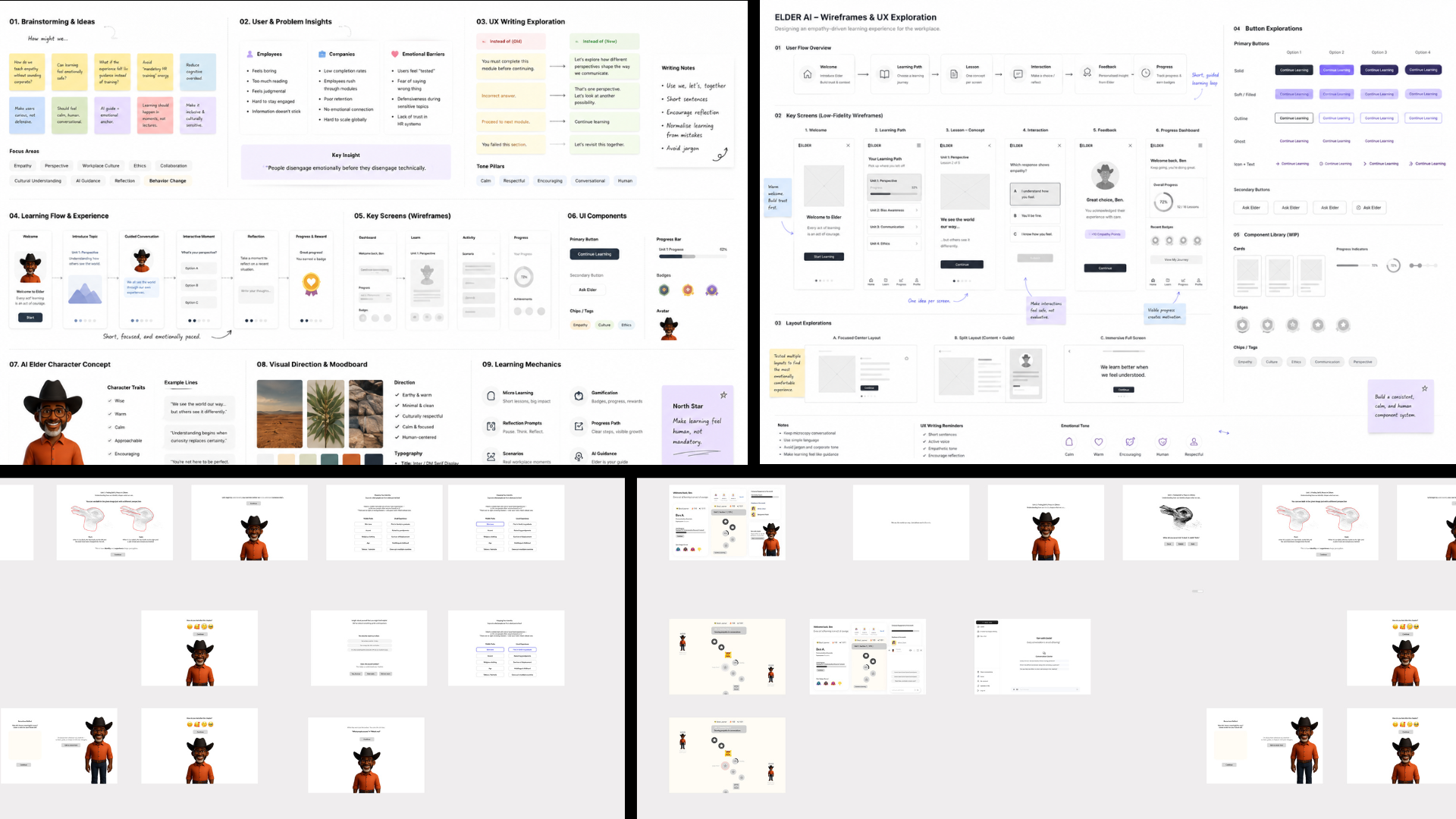
I structured Elder around short learning units, one idea at a time, conversational UX writing, visible progress, and moments of interaction between pieces of content.
The Elder guide became a narrative anchor for the experience, inspired by the role of Elders within the cultural context behind the project. Rather than presenting the platform as a list of corporate rules, the concept framed learning as listening, questioning, reflecting, and progressing through a guided journey.
I also introduced an AI conversation concept for questions that did not fit neatly inside a module. Suggested prompts could help people begin, while an open input allowed them to ask a question in their own words. The intention was to preserve some of the freedom people have when asking a facilitator a question during a live workshop.
Gamification was used as structure rather than decoration. Progress indicators, learning units, checkpoints, badges, and lightweight rewards helped communicate where someone was, what they had completed, and what came next.
Prototype Direction
The final concept was intentionally developed to medium fidelity. The team needed a prototype that could communicate the product vision to potential funders and developers, but the research was still shaping the product and I did not want visual polish to make early decisions look irreversible.
The prototype brought together the core system: guided modules, progress, reflection, AI-supported questions, learning activities, rewards, and a clearer path through the content.
This gave the team a shared product language and turned a large collection of workshop material into something that could be discussed, reviewed, pitched, and eventually built.
Outcome
The work moved Elder from an open-ended workshop digitization idea to a defined product concept with a clear learning model, interaction direction, and prototype that could be used in funding conversations.
- Translated long-form workshop material into a structured digital learning journey
- Established the Elder guide as the product's narrative and conversational anchor
- Defined AI-supported questioning as a way to extend learning beyond fixed modules
- Introduced progress and gamification patterns to make learning feel manageable
- Created an investor-ready prototype and a clearer foundation for engineering
- Helped the project secure $1M in funding for further development
The most important outcome was not a collection of screens. It was turning an ambiguous idea into a product people could understand, discuss, fund, and build.